

The Hellenic Chips Competence Centre (HCCC) participated in electronica 2026, held from 10 to 13 November at Messe München, as part of the Greek National Pavilion in Hall C5, Booth 419. One of Europe’s most important international gatherings for the electronics industry, electronica brings together companies and organisations from across the electronics value chain, including semiconductor and microelectronics companies, chip manufacturers, equipment suppliers, research centres and technology leaders. The 2026 edition attracted more than 86,000 trade visitors from 107 countries and 3,512 exhibitors from 60 countries, surpassing the corresponding figures of the 2024 edition.
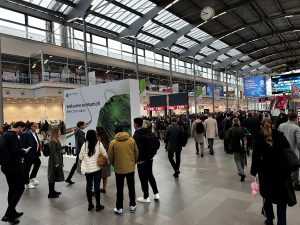
HCCC joined the Greek Pavilion alongside with companies Argo Semiconductors, Kenotom and Weasic, showcasing the capabilities of Greece’s growing semiconductor, microelectronics and advanced electronics ecosystem.

For HCCC, electronica offered an important international platform to present its role as Greece’s national competence hub for semiconductors and microelectronics. HCCC supports startups, SMEs, researchers and industry through access to chip-design tools and methodologies, European Design Platform and Pilot Line opportunities, HPC services, skills development, technical knowledge transfer, prototyping, innovation support and connections to funding and investment opportunities.
Building European connections
During the exhibition, HCCC strengthened contacts with European stakeholders and fellow Chips Competence Centres.
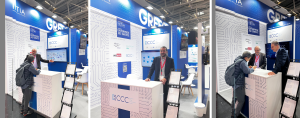
This international networking reflects an important part of HCCC’s mission: positioning Greece within the European semiconductor landscape and developing practical links between Greek companies, researchers, European competence centres and technology infrastructures.
Official visit by the Greek authorities in Munich
The Greek Pavilion also welcomed an official delegation from the Consulate General of Greece in Munich and its Office for Economic and Commercial Affairs, including Mr. Konstantinos Kodellas, Consul General of Greece in Munich, Ms. Nefeli Pappakou, Head of the Office for Economic and Commercial Affairs, Ms. Maria Mousouraki, Secretary for Economic and Commercial Affairs, and Mr. Giorgos Mechteridis, Scientific Associate.

During the visit, the delegation met with representatives of the Greek technology ecosystem, including Mr. John Kikidis, Vice President of HETiA, Mr. Alexios Birbas, HCCC Executive Board member and Professor at the University of Patras, as well as representatives of KENOTOM, WEASIC and Argo Semiconductors. Discussions focused on their activities, innovative solutions, opportunities for international business development and potential areas for collaboration.

The meeting also provided an opportunity to discuss Greece’s emerging National Semiconductor and Microelectronics Strategy 2026–2030, highlighting the country’s ambition to strengthen prototyping infrastructures, access to advanced design tools, specialised industrial skills and mechanisms that facilitate technology transfer from research to market.
Strengthening Greece’s position in the European semiconductor landscape
HCCC’s presence at electronica 2026 provided an opportunity to connect Greece’s semiconductor ecosystem with international partners while showcasing the country’s capabilities in innovation, research and advanced technology.
As also underlined by the Greek Office for Economic and Commercial Affairs in Munich, a sustained Greek national presence at electronica can strengthen the visibility of the domestic technology ecosystem, highlight investment opportunities in integrated-circuit design and semiconductor-related services, and reinforce links between Greek companies and international investors.
The Greek participation was organised by HETiA (Hellenic Emerging Technologies Industry Association) in cooperation with Enterprise Greece, whose support contributed to the international promotion of the Greek technology ecosystem.
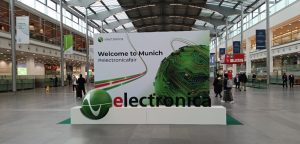
For HCCC, electronica 2026 represents another step towards connecting Greece with Europe’s semiconductor value chain and creating new opportunities for collaboration, technology transfer, investment and innovation


HCCC project is supported by Chips JU and its members, and is co-funded by European Union and the Greek Government via the “Competitiveness” Programme.
Co-funded by the European Union. Views and opinions expressed are however those of the author(s) only and do not necessarily reflect those of the European Union or EYDE-VEK. Neither the European Union nor the granting authority can be held responsible for them.